Man has been fascinated by paint since we lived in caves.
In an age of machine made artefacts, we are still spellbound by the mark making of humans. The machines struggle to make the right mistakes.
We recognise the axe bite in a beam. We can see the swing and the missing chip. My work is only finished when it's being looked at, I try to leave the beholder's share as open as I can. We all see things differently.
Art sits on craft like oil on water. Craft can be taught and practised, art comes from the top down though and can only really be recognised after the fact. The tools and techniques might be the same, but the aim and objective are opposite. Where craft aims to make an aesthetic merit of necessity, art can survive only by making a necessity of merit. Something can be beautiful because it is well made, or well made because it is beautiful.
Framing my paintings provides me with a useful transition between the two. Perhaps the closest anyone comes to cave art might be considered calligraphy of the sort done with brushes - done in one hit with no mistakes. Picasso worked like that, sometimes. Machines work like that. It’s economical. My paintings are over painted time and time again as I try to erase the mechanical, the practiced. I want to keep the ones that remind me of a freshly split log that happens to resemble a landscape.
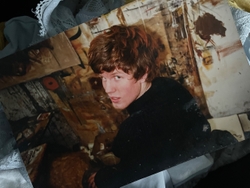
Born in London in 1971, I left my Foundation Year at Camberwell in 1990. I live near Cambridge in the UK.